Pakistan's solar rules have changed. New solar connections are moving from net metering to net billing, and for factories that export surplus power at midday, the numbers no longer work the way they used to. Zero export control is one of the simplest ways to protect the value of a solar plant under the new rules.
Key takeaways
- Under net metering, exported and imported units were valued roughly the same.
- Under net billing, exported units are bought back at a much lower rate, while imported units are still billed at the full tariff.
- For factories, every unit exported at midday is now worth far less than a unit used on site.
- Zero export control keeps all solar on site, matches generation to load in real time and avoids unpaid exports.
- The same controller can also apply limited export or time-based export limits when a site's agreement allows some export.
Net metering vs net billing: what changed
Net metering let solar users export surplus power to the grid and offset it against the units they imported, almost one for one. A unit sent out at noon could cancel a unit taken in at night.
Net billing, introduced through NEPRA's new prosumer regulations, separates the two. Imported units are charged at the full applicable tariff. Exported units are credited at a buyback rate set by the regulator, which is well below the retail tariff. Existing net metering users are generally kept on their current terms until their agreements expire, while new applicants come under net billing.
The result is simple: exporting solar is no longer a good deal. The value now lies in using as much solar as possible on site.
What this means for factories and mills
Industrial plants such as flour mills, rice mills, textile units and cold stores often installed solar sized for peak production. On days when lines slow down, or during breaks and shift changes, solar output exceeds the load and spills to the grid.
Under net billing, that spill earns very little. Worse, if the plant does not hold a valid net metering or net billing agreement, exporting can create compliance problems with the distribution company.
What is zero export control?
Zero export control is a control system that keeps a solar plant from sending any power back to the grid. It works in three steps:
- Measure. A power meter at the grid connection, such as a NeoTAQ power meter, measures import and export continuously.
- Compare. It compares solar generation with the site load at that moment.
- Adjust. It limits inverter output in real time, so solar covers as much of the load as possible but never pushes past it.
The plant still imports from the grid whenever load exceeds solar. It simply never exports.
Beyond zero export: limited and scheduled export
Zero export is not the only option. The same controller can apply whatever export rule a site needs:
- Zero export. No power goes to the grid at any time.
- Limited export. Export is capped at a fixed level, for example a set number of kW agreed with the distribution company or allowed under the site's net billing agreement.
- Scheduled export limits. Different limits at different times of day or on different days, such as zero export during low-value hours and limited export when it pays.
- Power-based limits. Export is allowed only above or below set power levels, or as a share of solar output.
Rules can be changed remotely as tariffs or agreements change, without rewiring the site.
Benefits of zero export control
- Maximum self-consumption. Every unit of solar goes into production instead of being sold back cheaply.
- Compliance. Plants without an export agreement stay within the rules.
- No change to operations. Lines run as normal; solar follows the load automatically.
- Works with existing inverters. neoCore and neoSync talk to common inverter brands such as Sungrow, so most plants do not need new inverters.
- Visibility. With neoSphere, owners see solar, grid import and self-consumption on one screen.
Should you add batteries?
Zero export control decides what to do with surplus solar: limit it. A battery gives that surplus somewhere useful to go, storing it at midday and using it in the evening, when grid units are most expensive. For many plants, zero export control is the first step and storage is the next. Our neoES controller manages batteries alongside solar and the grid.
Real example: flour mills in Pakistan
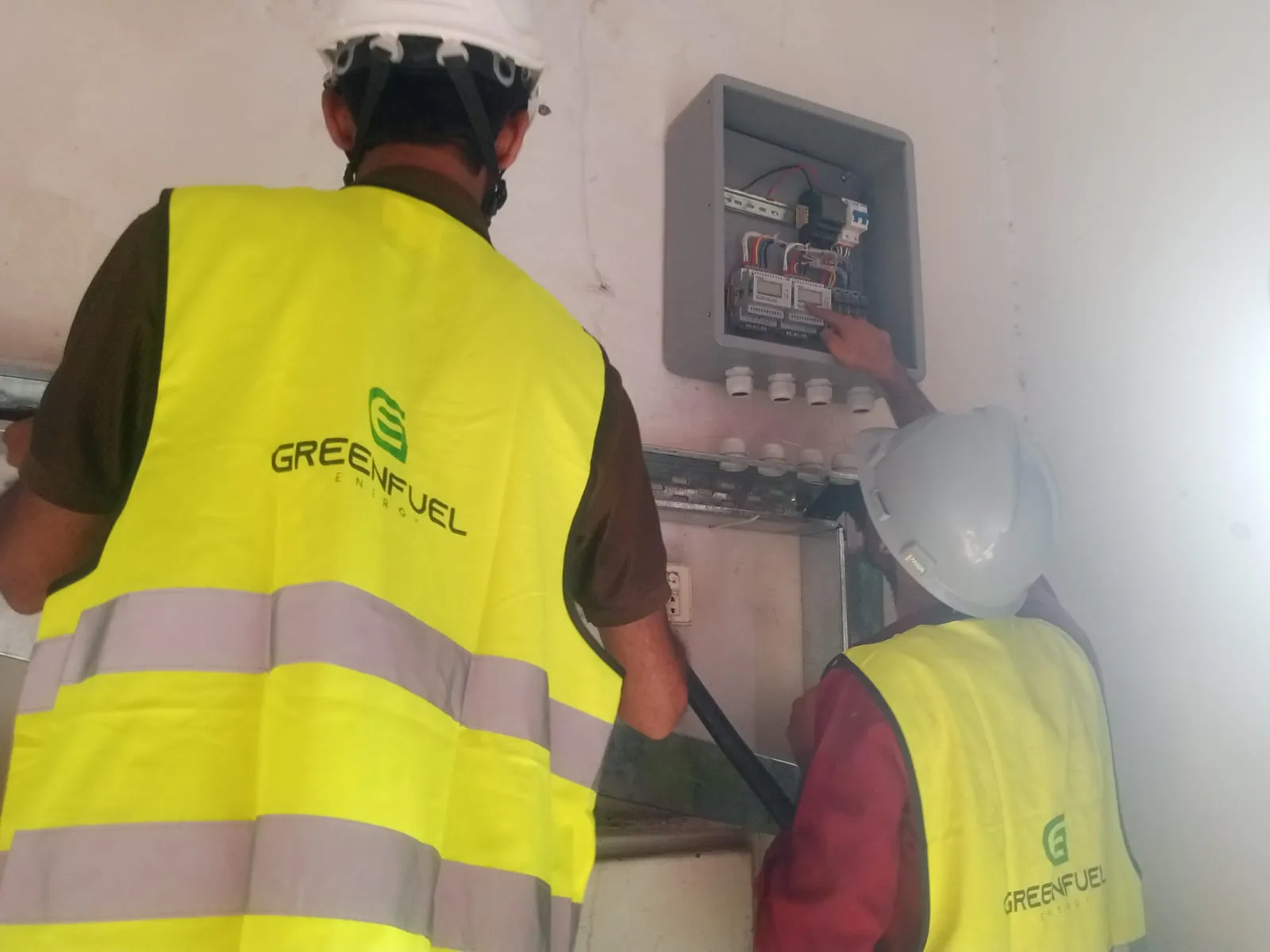
NeoTAQ has installed zero export control at flour mills in Pakistan, using neoCore, neoSync and NeoTAQ power meters with Sungrow inverters, so their solar plants feed the mills directly and never export, keeping them compliant as the rules move to net billing. Read the case study.
Frequently asked questions
Is net metering ending in Pakistan? For new solar connections, NEPRA's new prosumer regulations move users to net billing. Existing net metering agreements are generally honoured until they expire. Always check the latest NEPRA notification for your case.
Will zero export control reduce my solar savings? It reduces export, not self-consumption. Under net billing, exported units earn little, so keeping solar on site usually protects savings.
Can zero export control work with my current inverters? In most cases, yes. The controller connects to common inverter brands over standard protocols.
Can I export some power instead of none? Yes. The controller can cap export at a set kW level, or apply different limits at different times of day, to match your agreement and tariff.
Do I need a battery as well? Not to achieve zero export. A battery adds value by storing surplus solar for later use.
Running a factory in Pakistan with solar? See our industry solutions or talk to our team.
Updated